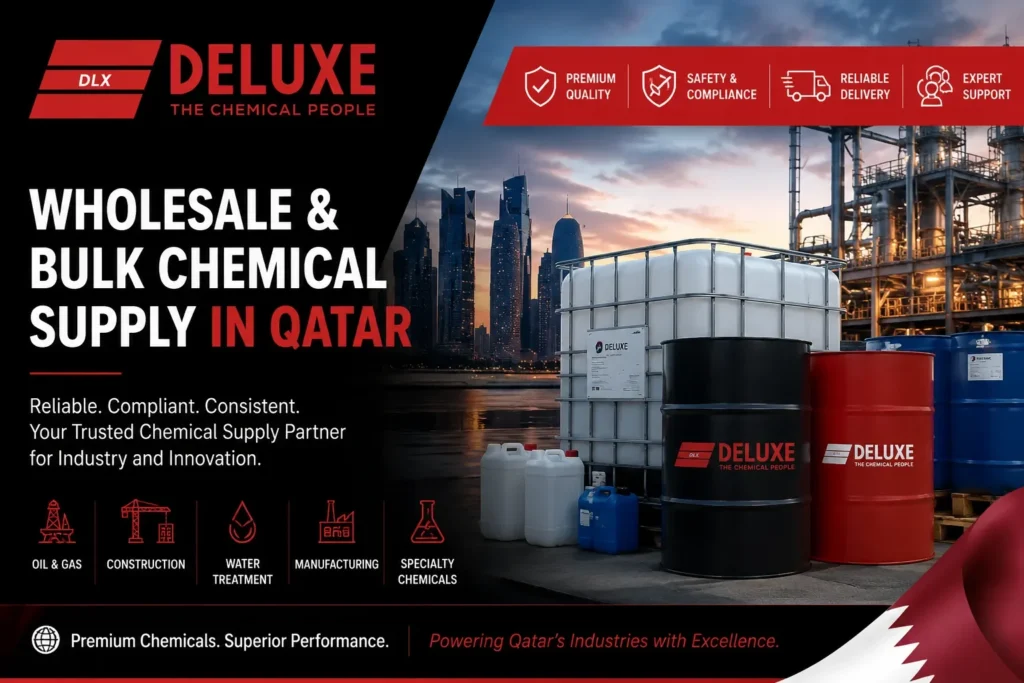
Qatar’s industrial growth has increased demand for reliable wholesale and bulk chemical supply services. Industries such as oil & gas, construction, manufacturing, water treatment, and food processing require large quantities of chemicals to maintain daily operations. Because of this, businesses depend on chemical suppliers that can provide consistent quality, regulatory compliance, and safe logistics.
Wholesale chemical suppliers in Qatar support both local industries and international industrial operations. They manage sourcing, storage, transportation, and delivery of industrial chemicals in bulk quantities. This helps businesses reduce procurement costs, improve operational efficiency, and maintain stable supply chains.
In this guide, you will learn how bulk chemical supply works in Qatar, which industries rely on industrial chemicals, how suppliers manage compliance and logistics, and what factors businesses should consider when selecting a chemical supply partner.
What Is Wholesale and Bulk Chemical Supply in Qatar?
Wholesale chemical supply refers to the large-scale distribution of industrial chemicals to businesses rather than individual consumers. These chemicals are usually sold in drums, tanks, intermediate bulk containers (IBCs), or tanker loads.
Bulk chemical suppliers in Qatar typically provide:
- Industrial raw materials
- Specialty chemicals
- Petrochemicals
- Cleaning compounds
- Water treatment chemicals
- Laboratory chemicals
Unlike retail suppliers, wholesale distributors focus on long-term industrial demand and high-volume procurement contracts.
Wholesale & bulk chemical supply in Qatar involves sourcing, storing, transporting, and distributing industrial chemicals in large quantities to industries such as oil & gas, construction, manufacturing, and water treatment. These suppliers provide logistics, compliance support, and consistent chemical availability for industrial operations.
Which Industries Depend on Bulk Chemical Suppliers in Qatar?
Many sectors in Qatar rely heavily on industrial chemical suppliers.
Oil & Gas Industry
The oil and gas sector uses:
- Drilling chemicals
- Corrosion inhibitors
- Solvents
- Lubricants
- Petrochemical compounds
Construction Industry
Construction companies require:
- Concrete additives
- Waterproofing chemicals
- Adhesives
- Industrial coatings
Water Treatment Industry
Water treatment facilities use:
- Chlorine compounds
- Coagulants
- pH balancing chemicals
- Desalination chemicals
Manufacturing Sector
Manufacturers depend on:
- Industrial solvents
- Cleaning agents
- Processing chemicals
- Specialty additives
Food Processing & Healthcare
These sectors require:
- Food-grade chemicals
- Sanitation chemicals
- Laboratory reagents
- Sterilization compounds
As industrial diversification increases in Qatar, chemical demand continues to grow across multiple sectors.
What Types of Industrial Chemicals Are Supplied in Bulk?
Bulk suppliers provide a wide range of industrial chemicals based on application requirements.
| Chemical Type | Common Applications |
| Acids | Metal treatment, manufacturing |
| Alkalis | Cleaning and processing |
| Solvents | Industrial production |
| Petrochemicals | Oil & gas operations |
| Water Treatment Chemicals | Desalination and purification |
| Specialty Chemicals | Industry-specific applications |
| Cleaning Chemicals | Industrial sanitation |
Specialty Chemicals
Specialty chemicals are designed for specific industrial uses. These include:
- Corrosion inhibitors
- Emulsifiers
- Catalysts
- Anti-foaming agents
Water Treatment Chemicals
Water treatment remains one of Qatar’s largest industrial chemical sectors due to desalination requirements and industrial water management.
For businesses handling large industrial operations, understanding proper water treatment chemicals usage can improve both operational efficiency and compliance performance.
How Does the Chemical Supply Chain Work in Qatar?
The chemical supply chain involves several operational stages.
Chemical Import & Sourcing
Many industrial chemicals are imported through international suppliers and regional manufacturing hubs.
Warehousing & Storage
Chemicals are stored in specialized facilities with:
- Temperature control
- Hazard separation
- Spill containment systems
- Ventilation systems
Transportation & Logistics
Hazardous and non-hazardous chemicals require regulated transport systems using:
- Tanker trucks
- Drums
- IBC containers
- ISO tanks
Delivery & Inventory Management
Modern suppliers use inventory forecasting and procurement systems to ensure an uninterrupted supply.
Businesses seeking reliable operations often invest in industrial logistics systems to improve chemical inventory planning and reduce downtime.
What Regulations Govern Chemical Distribution in Qatar?
Chemical suppliers in Qatar must follow strict regulatory standards.
Important Compliance Areas
- Hazardous material handling
- Import documentation
- Storage regulations
- Transportation safety
- Environmental protection
MSDS Requirements
Material Safety Data Sheets (MSDS) are required for most industrial chemicals. These documents explain:
- Chemical composition
- Safety risks
- Emergency procedures
- Handling instructions
Labeling Standards
Chemical containers must include:
- Hazard symbols
- Safety instructions
- Storage guidelines
- Product identification
Companies involved in hazardous material handling should ensure all suppliers meet local and international compliance standards.
How to Choose a Reliable Bulk Chemical Supplier in Qatar?
Selecting the right supplier affects both operational safety and business continuity.
Key Factors to Evaluate
Product Quality
Suppliers should provide:
- Quality certifications
- Batch consistency
- Technical specifications
Logistics Capability
Reliable suppliers offer:
- Fast delivery
- Bulk transport systems
- Inventory support
Technical Expertise
Some suppliers provide:
- Product consultation
- Application guidance
- Safety recommendations
Compliance & Safety
Ensure the supplier follows:
- Hazardous storage protocols
- Transportation regulations
- Environmental standards
Checklist for Buyers
- Verify certifications
- Review warehouse capabilities
- Confirm supply consistency
- Check emergency response systems
- Evaluate long-term pricing stability
What Are the Benefits of Buying Chemicals in Bulk?
Bulk purchasing provides several operational advantages.
Cost Savings
Large-volume purchasing reduces:
- Per-unit costs
- Transportation expenses
- Procurement frequency
Operational Continuity
Consistent supply helps industries avoid production delays.
Better Inventory Planning
Bulk procurement supports:
- Demand forecasting
- Storage optimization
- Long-term procurement contracts
Stronger Supplier Relationships
Long-term agreements often improve:
- Pricing stability
- Priority delivery
- Technical support access
Businesses focused on industrial chemical procurement often use contract supply agreements to stabilize operational costs.
What Challenges Affect Chemical Supply in Qatar?
Despite industry growth, several challenges remain.
Import Dependency
Many industrial chemicals are imported, which can create:
- Shipping delays
- Port congestion
- Supply interruptions
Regulatory Complexity
Handling hazardous chemicals requires strict compliance systems.
Storage Risks
Improper storage may lead to:
- Chemical contamination
- Safety hazards
- Environmental damage
Market Price Fluctuation
Global energy and raw material markets directly affect chemical pricing.
To reduce these risks, many companies partner with suppliers that provide advanced warehousing and logistics management systems.
How Are Chemical Suppliers Supporting Sustainability in Qatar?
Sustainability has become increasingly important in industrial operations.
Sustainable Chemical Practices
Modern suppliers now focus on:
- Eco-friendly chemical alternatives
- Waste reduction systems
- Sustainable packaging
- Energy-efficient logistics
Green Chemistry
Green chemistry aims to reduce environmental impact through safer production and reduced waste generation.
Waste Management
Responsible suppliers implement:
- Chemical disposal systems
- Spill prevention programs
- Recycling initiatives
Sustainability efforts also improve compliance with environmental regulations and corporate responsibility goals.
What Is the Future of the Chemical Supply Industry in Qatar?
Qatar’s industrial sector continues to expand through infrastructure development, energy investments, and manufacturing growth.
Key Future Trends
Smart Procurement Systems
Digital procurement platforms improve:
- Inventory tracking
- Order management
- Demand forecasting
Local Manufacturing Expansion
Regional production facilities may reduce import dependency.
Advanced Logistics
Modern warehousing technologies improve:
- Safety
- Speed
- Supply reliability
Sustainable Industrial Chemicals
Demand for environmentally friendly industrial chemicals is expected to rise significantly.
As industrial diversification continues, the wholesale chemical supply market in Qatar is likely to become more technologically advanced, sustainable, and supply-chain focused.
Why Industrial Businesses Need Long-Term Chemical Supply Partnerships
Long-term supplier relationships help businesses maintain operational consistency and improve procurement efficiency.
Benefits of Strategic Partnerships
- Stable pricing
- Consistent inventory
- Faster delivery
- Technical support
- Better compliance management
Suppliers that understand industry-specific requirements can also help businesses optimize chemical usage and improve operational safety.
FAQs
What are bulk industrial chemicals?
Bulk industrial chemicals are chemicals supplied in large quantities for industrial use in sectors like manufacturing, oil & gas, and construction.
Which chemicals are most used in Qatar’s industries?
Commonly used chemicals include solvents, acids, alkalis, petrochemicals, and water treatment chemicals.
Are chemical suppliers in Qatar regulated?
Yes. Chemical suppliers must follow safety, transportation, storage, and environmental regulations.
Can companies order custom chemical quantities?
Many suppliers offer customized order quantities depending on industrial requirements.
What industries buy wholesale chemicals?
Oil & gas, construction, manufacturing, water treatment, healthcare, and food processing industries all purchase wholesale chemicals.
Why is chemical storage important?
Proper storage reduces safety risks, prevents contamination, and ensures regulatory compliance.
How are hazardous chemicals transported?
Hazardous chemicals are transported using regulated tanker systems, drums, and specialized industrial containers following strict safety standards.