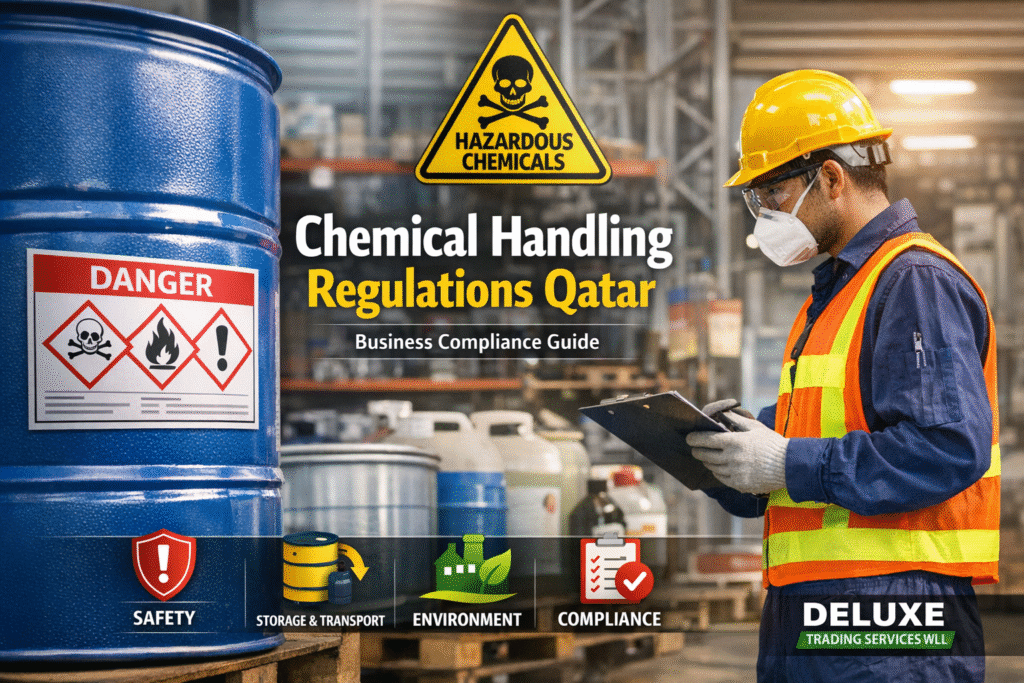
Handling chemicals is a serious responsibility for businesses in Qatar. From storage and transport to daily use and disposal, chemicals must be managed in a way that protects people, property, and the environment. Failing to follow chemical handling regulations Qatar can lead to safety incidents, legal issues, and business disruption.
This guide explains what businesses need to know about chemical handling rules in Qatar and how responsible suppliers support safe and compliant operations.
Why Chemical Handling Regulations Matter in Qatar
Chemicals are widely used across industries such as cleaning, healthcare, water treatment, construction, hospitality, and manufacturing. When handled incorrectly, they can cause:
- Health risks to workers
- Fire or spill incidents
- Damage to equipment and facilities
- Environmental harm
- Regulatory penalties
Qatar places strong focus on workplace safety and environmental protection. Following chemical handling rules helps businesses operate safely and responsibly.
Which Businesses Must Follow Chemical Handling Rules
Chemical handling regulations apply to many sectors, including:
- Cleaning and facility management companies
- Hospitals and clinics
- Hotels and hospitality facilities
- Industrial and manufacturing sites
- Municipal services
- Construction and maintenance contractors
Any business that stores, transports, or uses chemicals must follow basic safety and compliance practices.
Key Areas Covered by Chemical Handling Regulations in Qatar
Chemical handling rules in Qatar generally focus on several core areas.
1. Chemical Storage Requirements
Proper storage is essential for safety. Businesses are expected to:
- Store chemicals in labeled containers
- Keep incompatible chemicals separated
- Use well-ventilated storage areas
- Protect chemicals from heat and direct sunlight
- Secure storage areas to prevent unauthorized access
Good storage reduces the risk of leaks, reactions, and accidents.
2. Labeling and Documentation
Clear labeling helps workers understand what they are handling.
Labels and documents should include:
- Product name
- Hazard warnings
- Safe handling instructions
- Emergency response guidance
Safety Data Sheets (SDS) should be available on-site for all chemical products.
3. Safe Handling and Use Practices
When using chemicals, businesses should ensure:
- Workers are trained in safe handling
- Proper personal protective equipment (PPE) is used
- Correct dilution and application methods are followed
- Spills are handled using approved procedures
Training and supervision play a key role in reducing workplace incidents.
4. Chemical Transport and Delivery
Chemical transport must prevent spills and exposure.
Best practices include:
- Secure packaging during transport
- Clear labeling on delivery containers
- Controlled loading and unloading
- Trained staff handling chemical deliveries
Reliable suppliers help reduce transport-related risks.
5. Waste Management and Disposal
Chemical waste must be managed carefully.
Businesses should:
- Avoid mixing chemical waste
- Use approved disposal methods
- Prevent discharge into drains or soil
- Follow local environmental guidelines
Proper disposal supports environmental protection and sustainability goals.
Chemical Handling Compliance Checklist for Businesses
| Area | What Businesses Should Check | Purpose |
| Storage | Ventilation and separation | Reduce reaction risk |
| Labeling | Clear hazard information | Worker safety |
| Training | Staff handling knowledge | Fewer incidents |
| Transport | Secure packaging | Spill prevention |
| Disposal | Approved waste handling | Environmental safety |
How Compliance Supports Sustainable Operations
Following chemical handling regulations helps businesses:
- Reduce chemical waste
- Improve worker safety
- Protect surrounding environments
- Support long-term operational stability
Responsible chemical use aligns with Qatar’s focus on safety and sustainability.
Role of Chemical Suppliers in Compliance
A responsible supplier supports compliance by providing:
- Clearly labeled products
- Safety guidance and documentation
- Consistent product quality
- Support for proper storage and use
Working with a reliable supplier reduces compliance risks for businesses.
Why Businesses Choose Compliant Chemical Suppliers
Businesses prefer suppliers that:
- Understand local safety expectations
- Provide clear product information
- Maintain stable quality standards
- Support safe handling practices
This builds trust and supports long-term partnerships.
How DELUXE TRADING SERVICES WLL Supports Safe Chemical Handling
As a local supplier, DELUXE TRADING SERVICES WLL supports businesses across Qatar by offering:
- Properly labeled chemical products
- Access to safety documentation
- Guidance for correct product use
- Stable supply for regulated industries
You can learn more about available products and supplier support on the
our official website.
Is Your Business Compliant With Chemical Handling Regulations?
Your business may need a compliance review if:
- Chemicals are stored without labels
- Staff lack handling training
- Safety documents are missing
- Waste disposal methods are unclear
Reviewing these areas helps reduce risk and improve safety.
Chemical Handling Compliance in Qatar Starts With the Right Supplier
Understanding chemical handling regulations Qatar is essential for safe and compliant operations. By following proper storage, handling, transport, and disposal practices, businesses can protect people and property.
To explore compliant chemical solutions and supplier support & visit our website.
FAQs
Do all businesses in Qatar need to follow chemical handling rules?
Yes, any business that uses or stores chemicals must follow basic safety rules.
What documents should be available for chemicals?
Safety Data Sheets and clear product labels.
Is staff training required for chemical handling?
Yes, training helps prevent accidents and misuse.
Can chemical waste be poured into drains?
No, waste should be disposed of using approved methods.
How does a supplier help with compliance?
By providing labeled products, safety documents, and usage guidance.
Where can I learn more about compliant chemical products?
On the official DELUXE TRADING SERVICES WLL website.